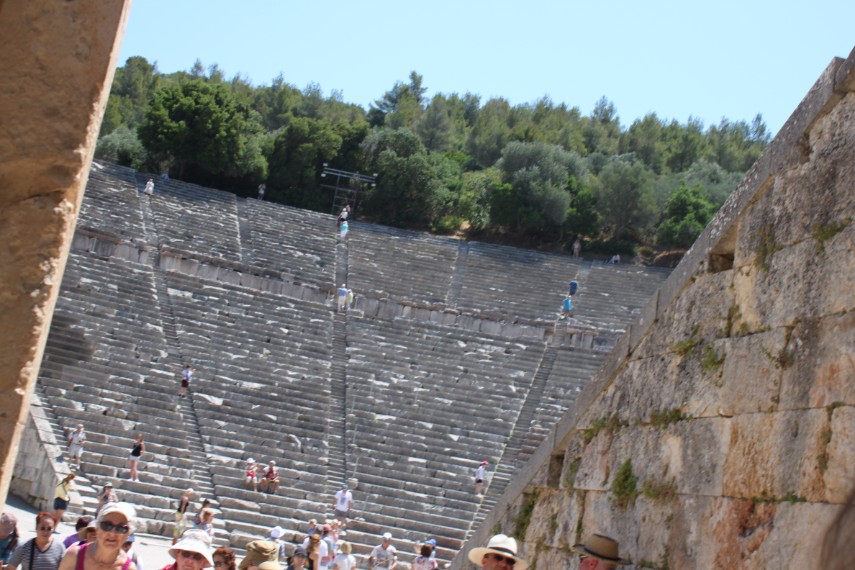
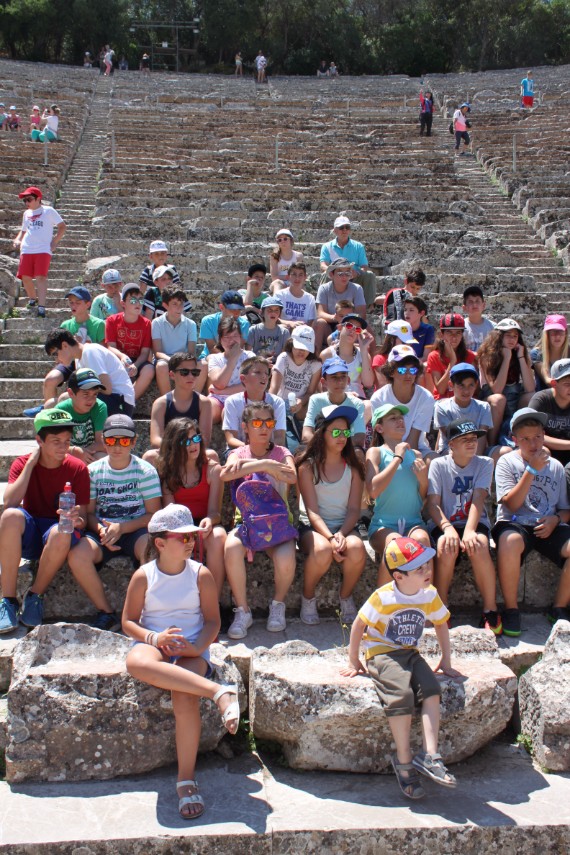
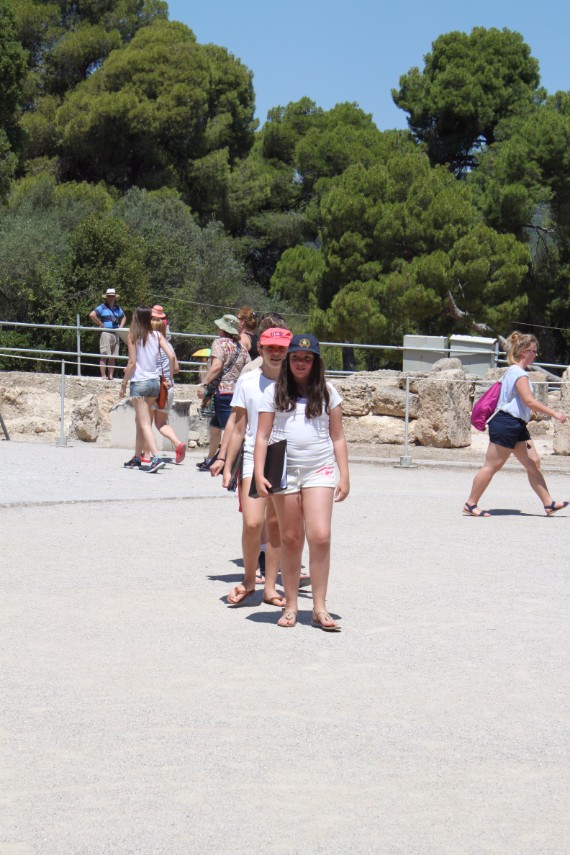
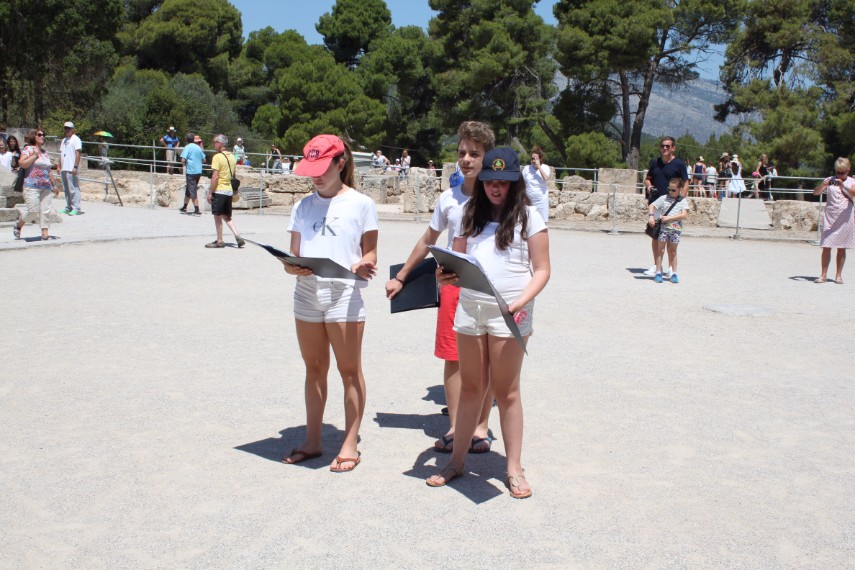
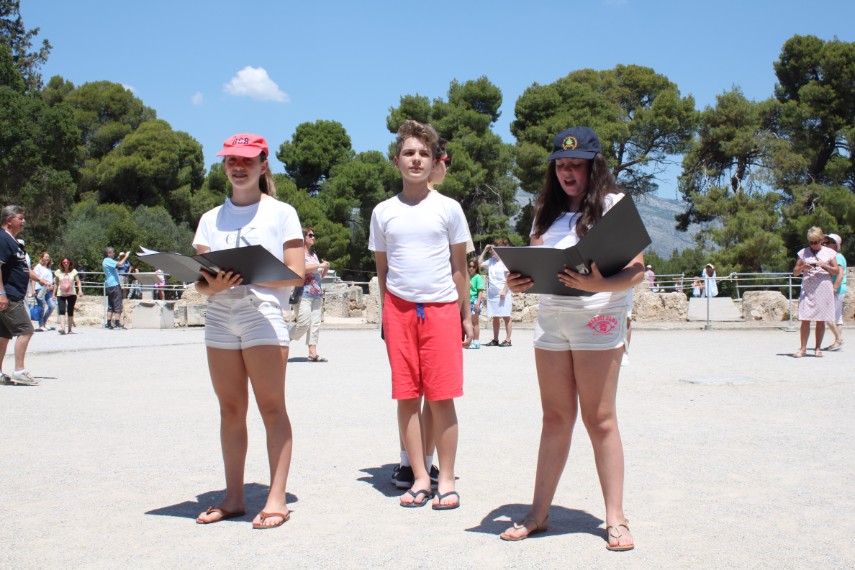
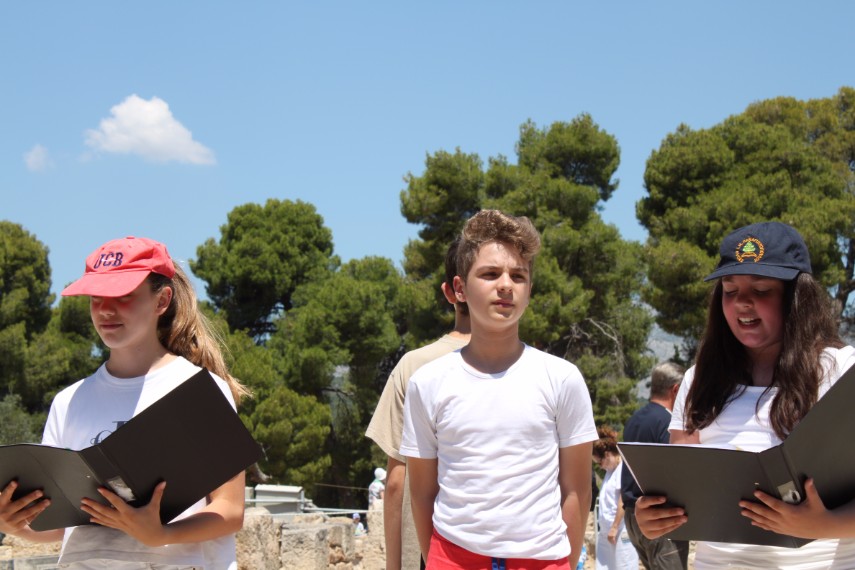
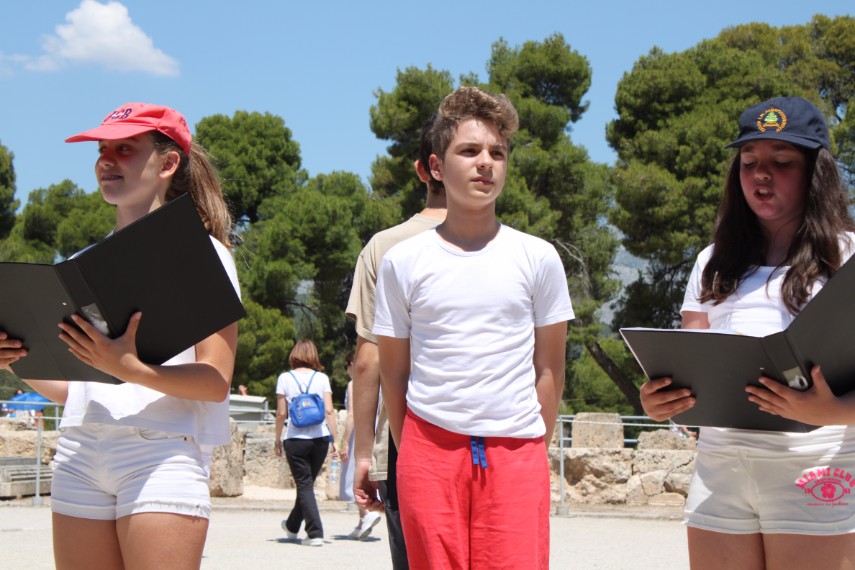
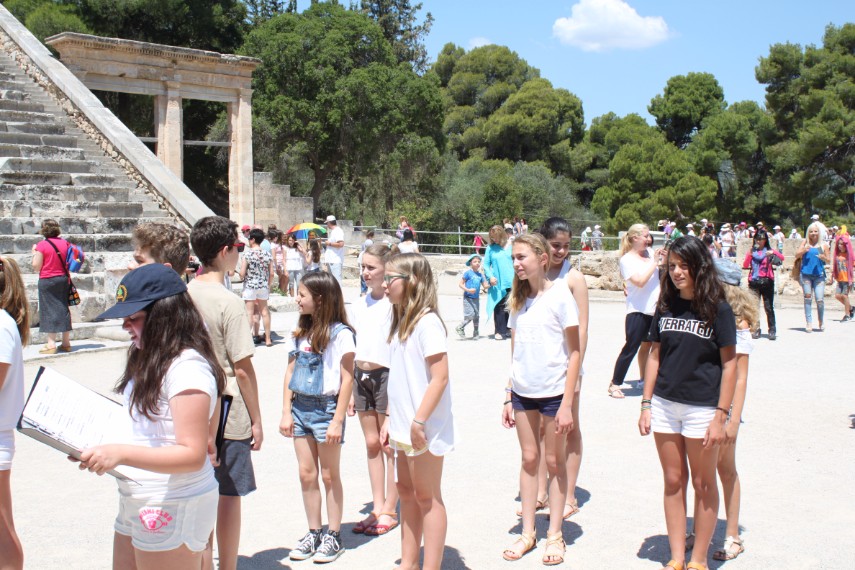
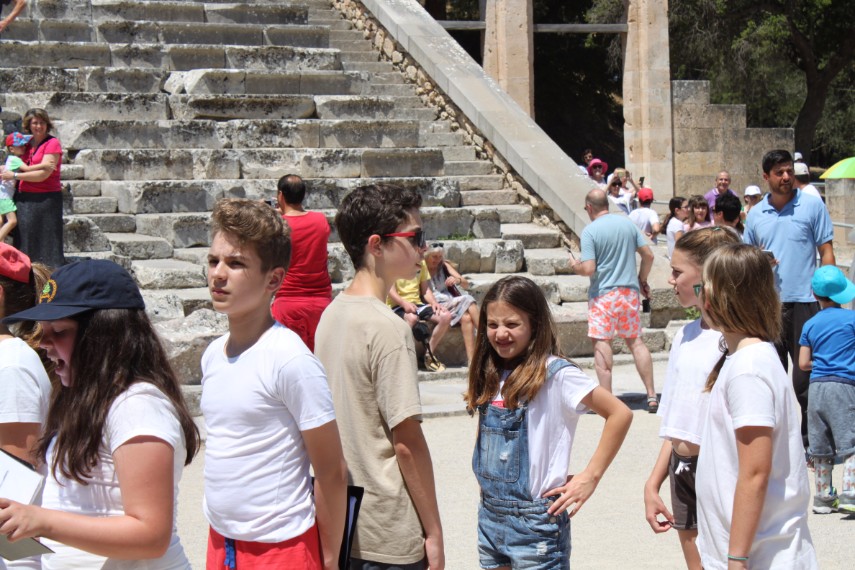
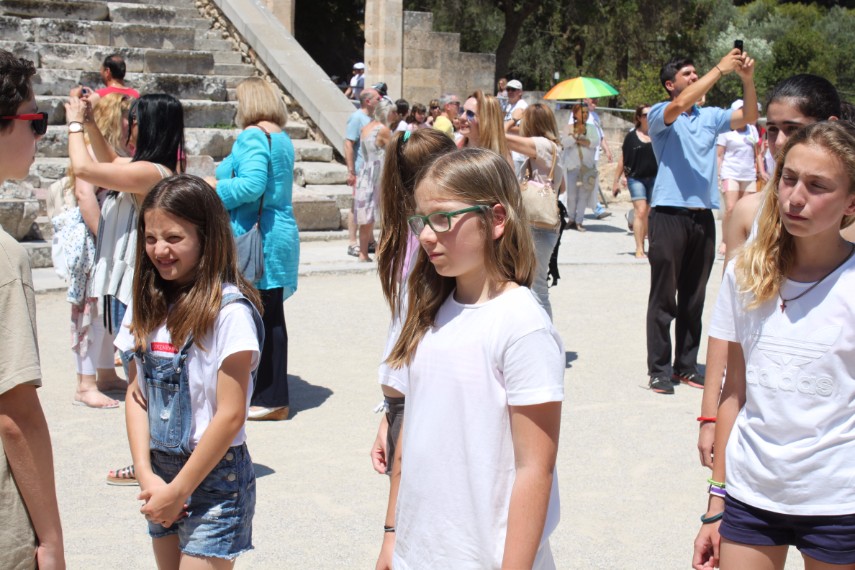
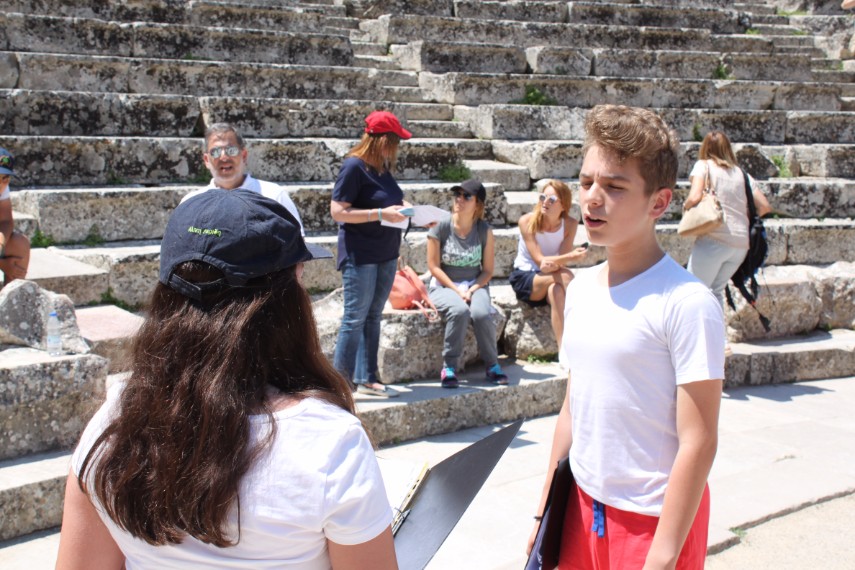
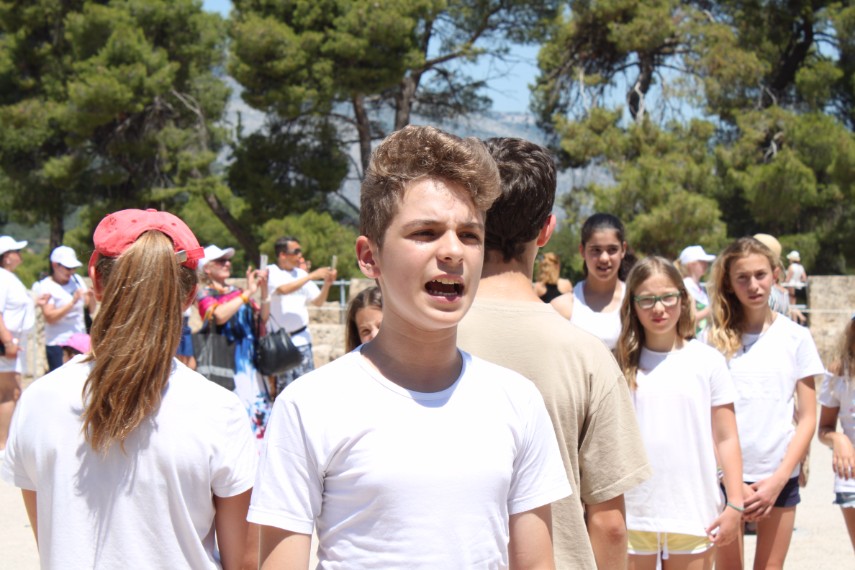
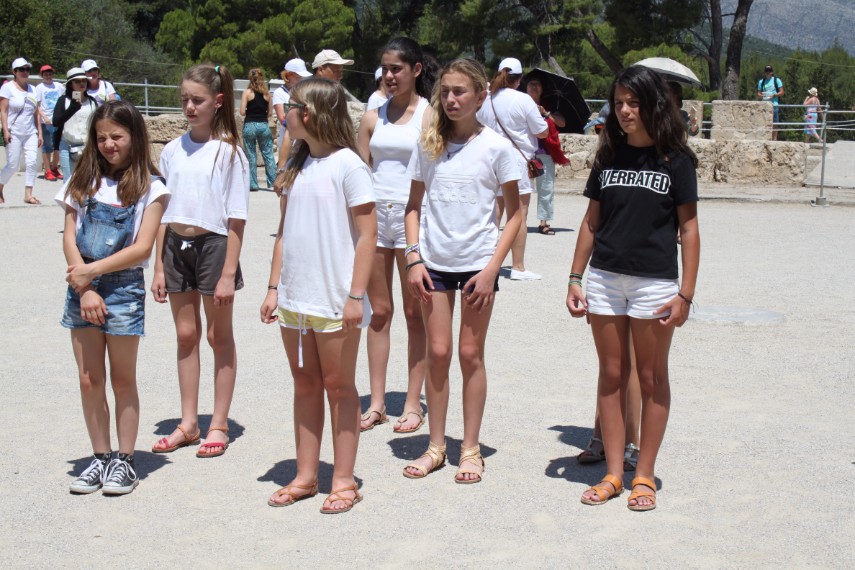
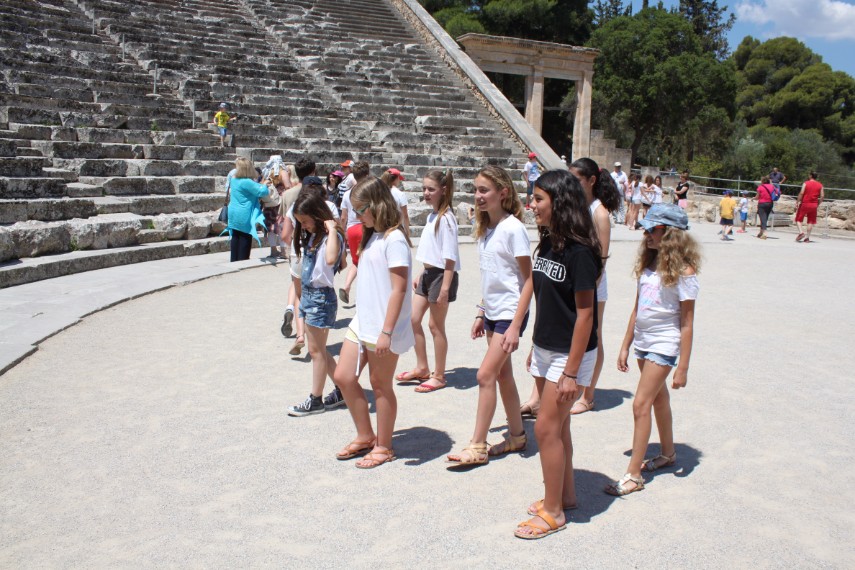
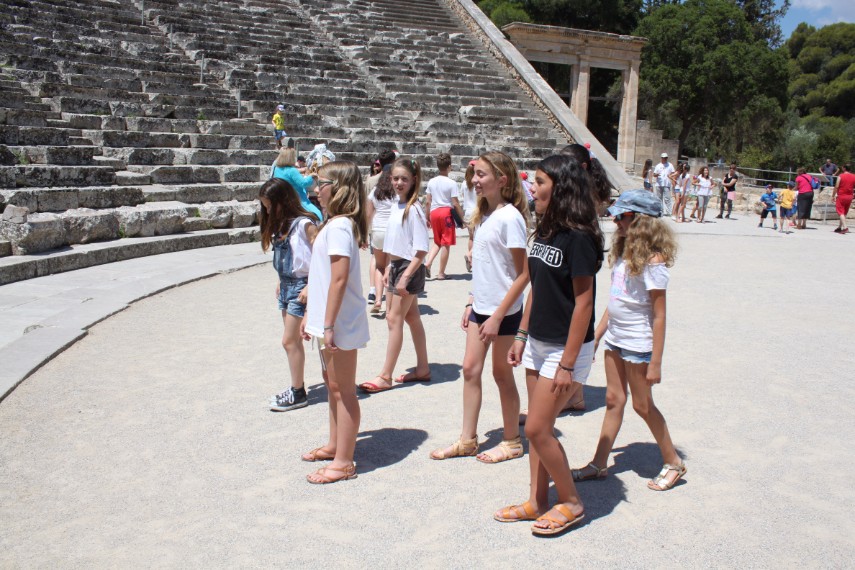
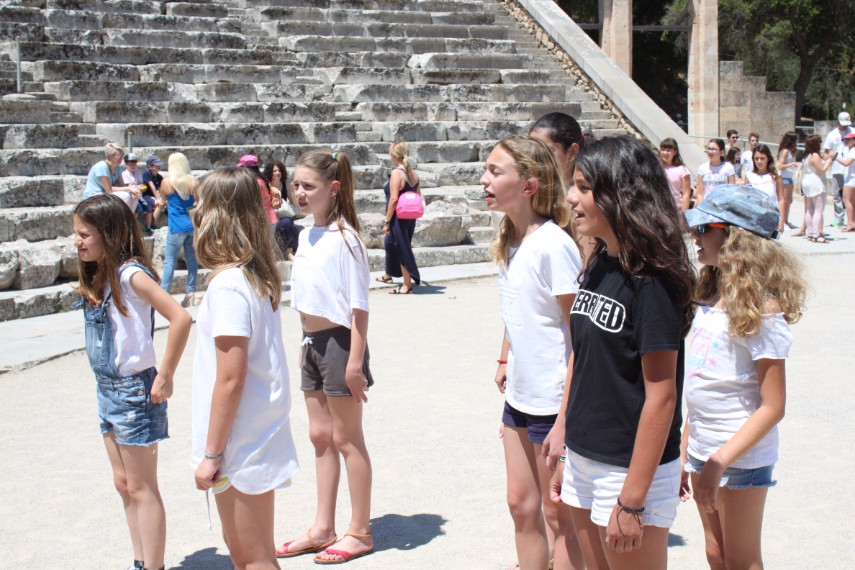
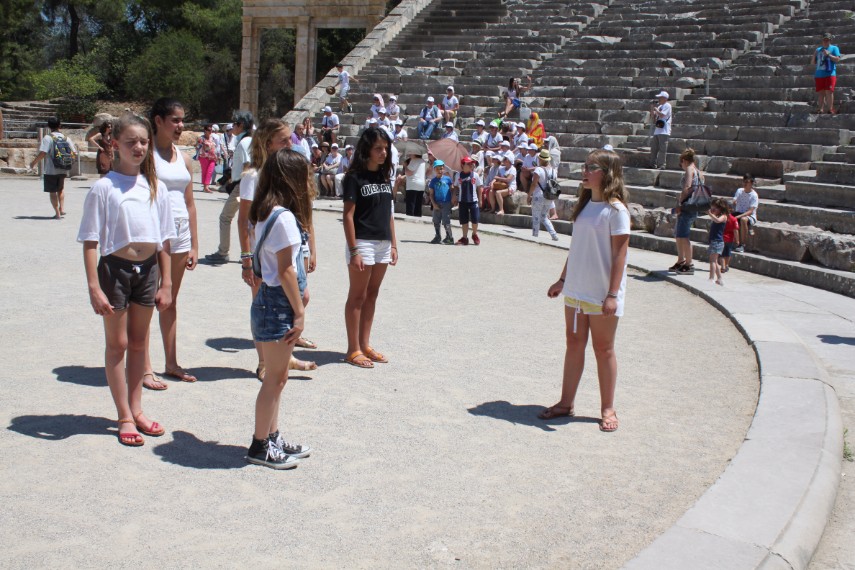
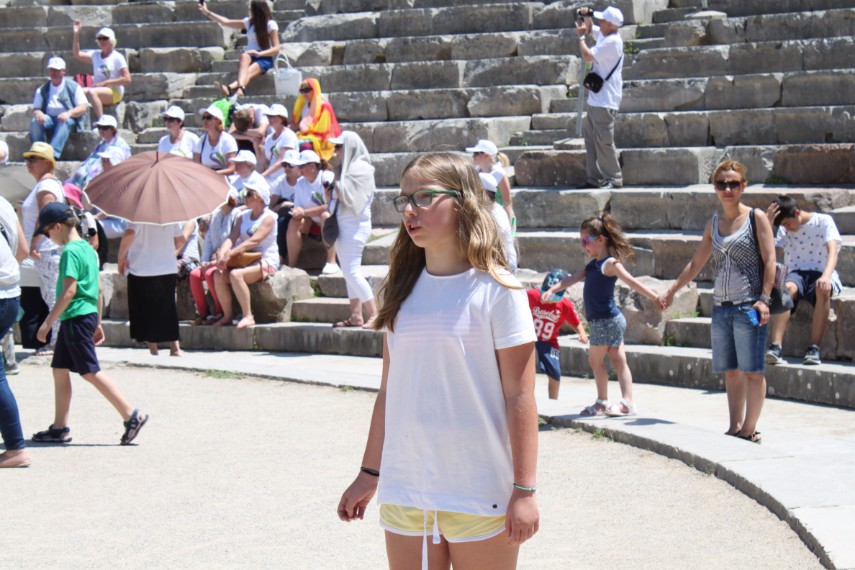
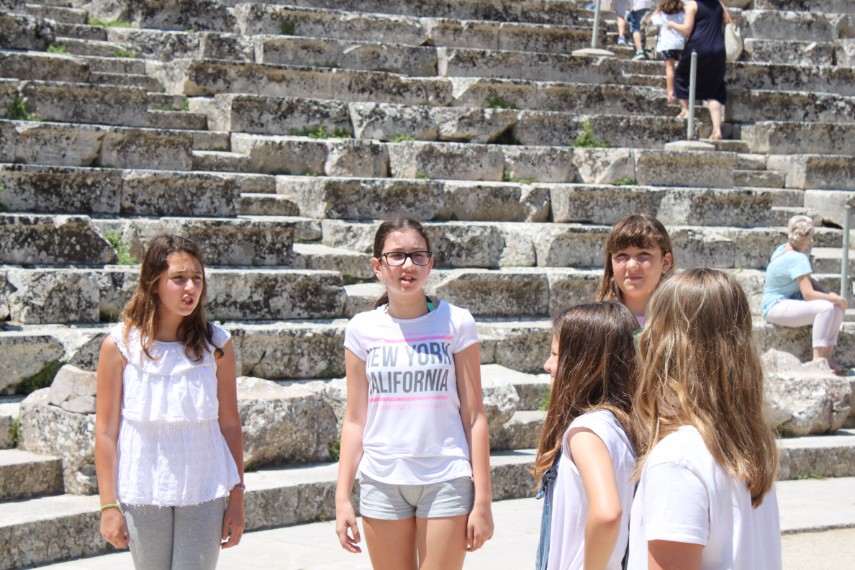
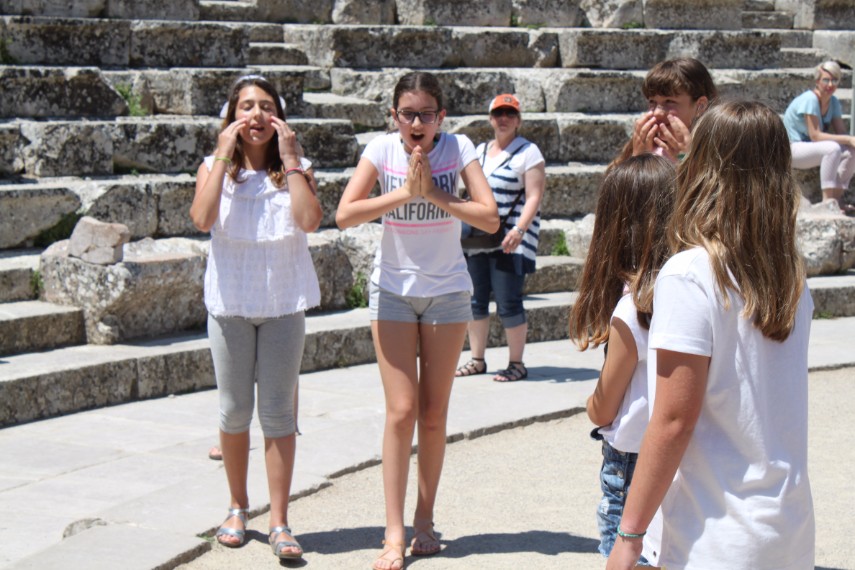
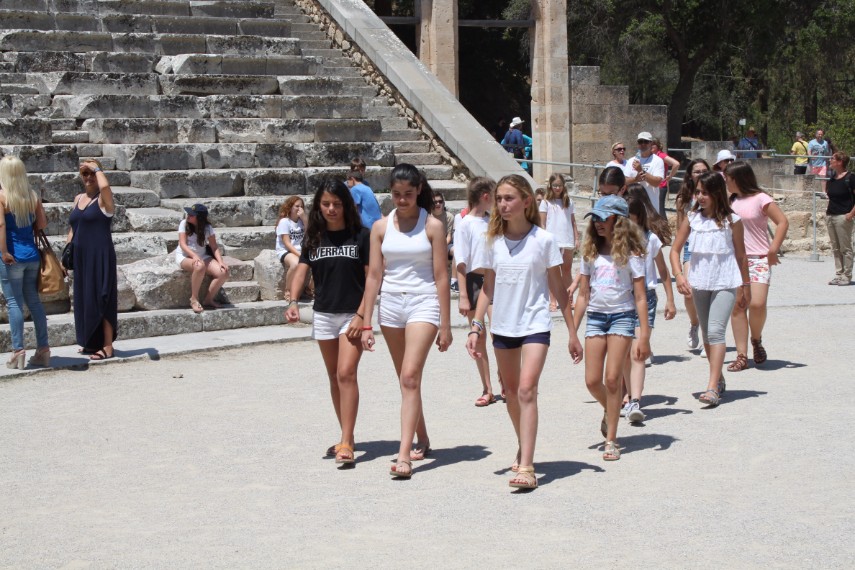
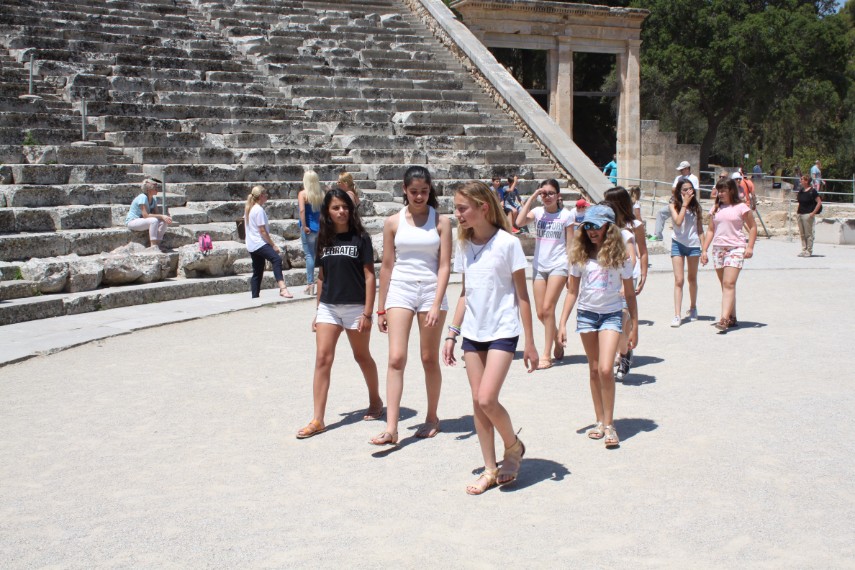
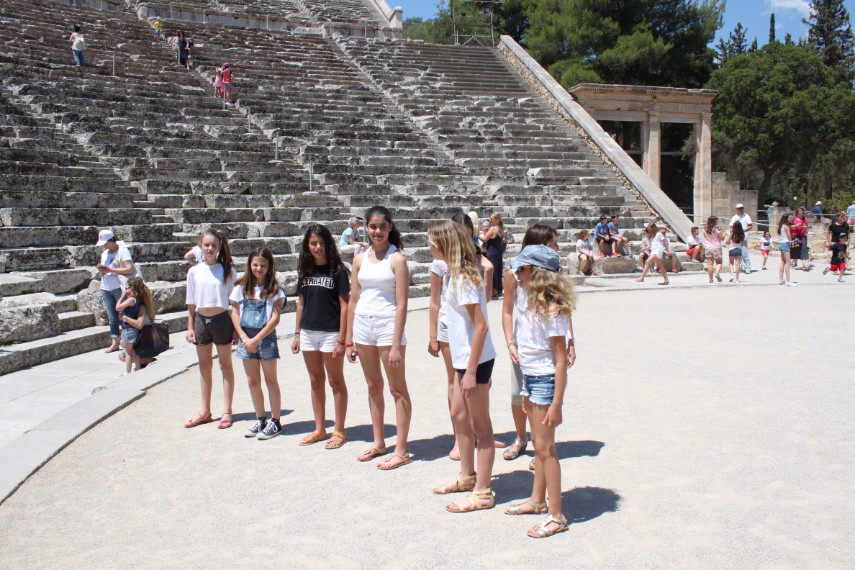
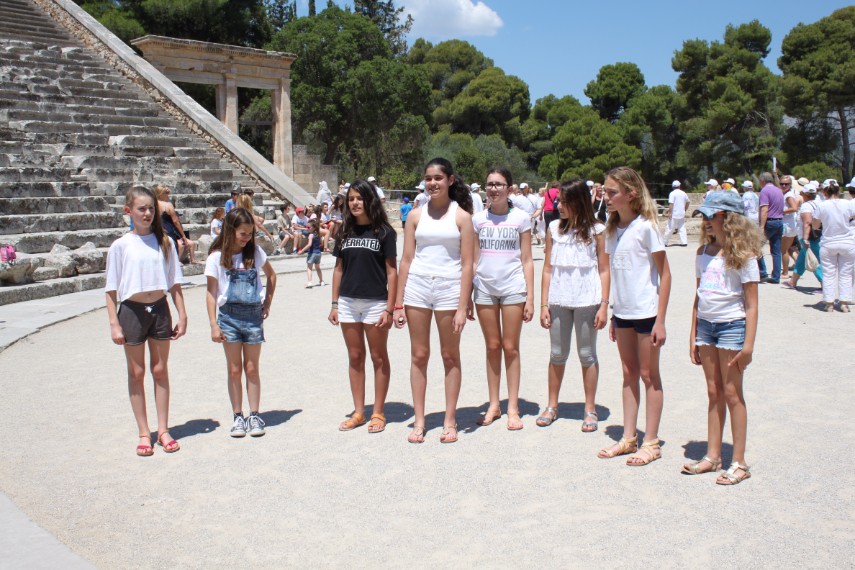
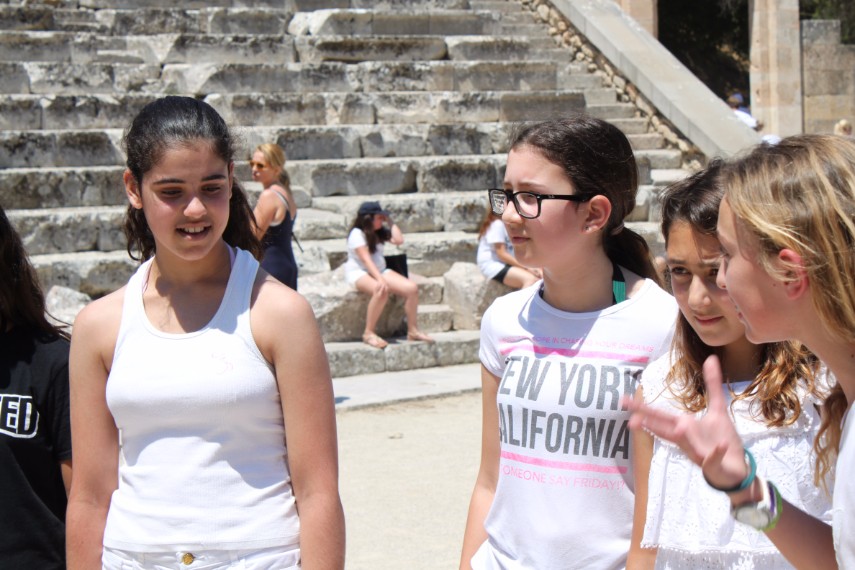
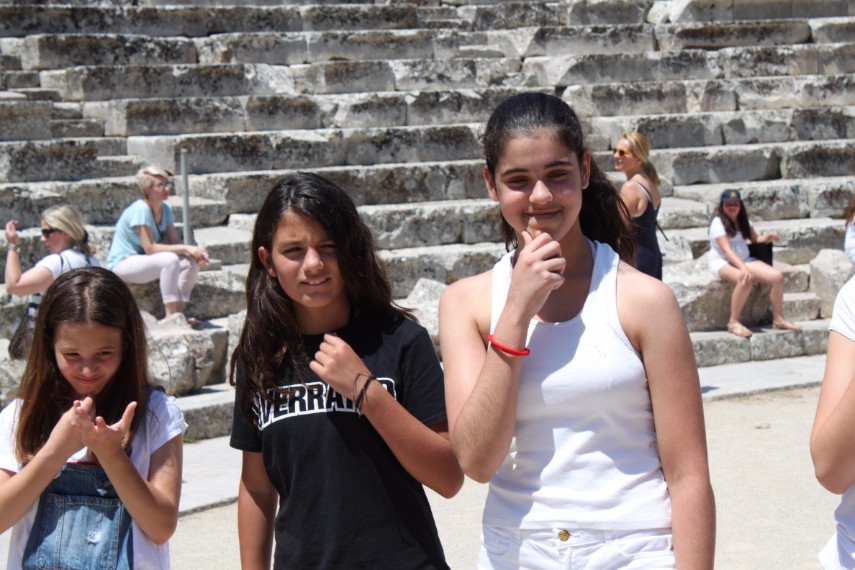
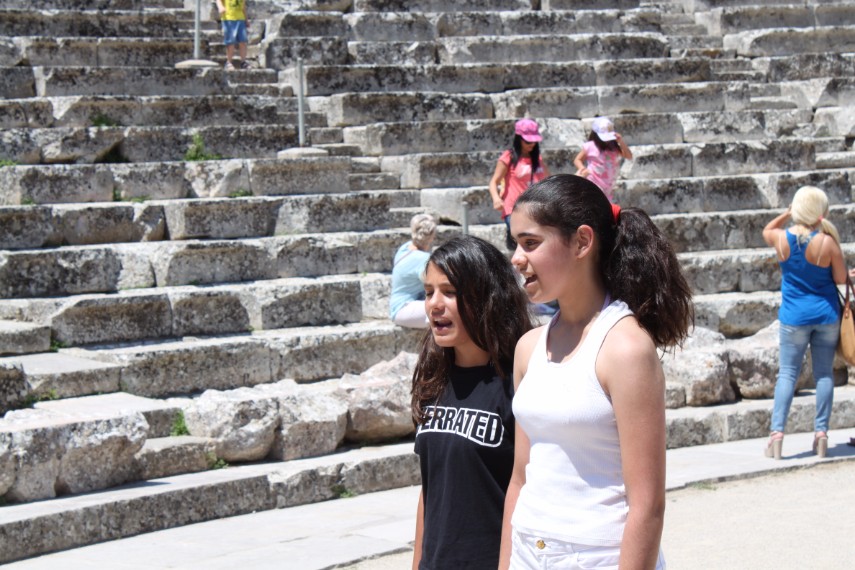
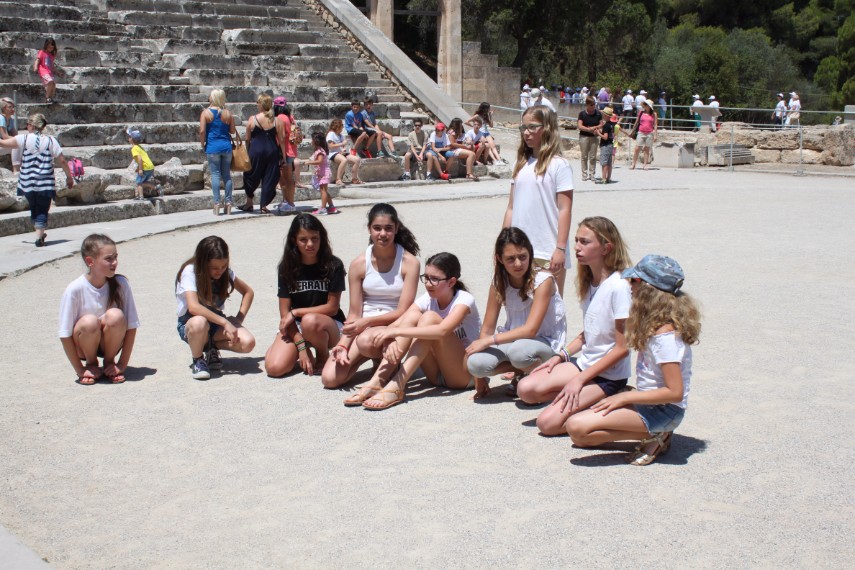
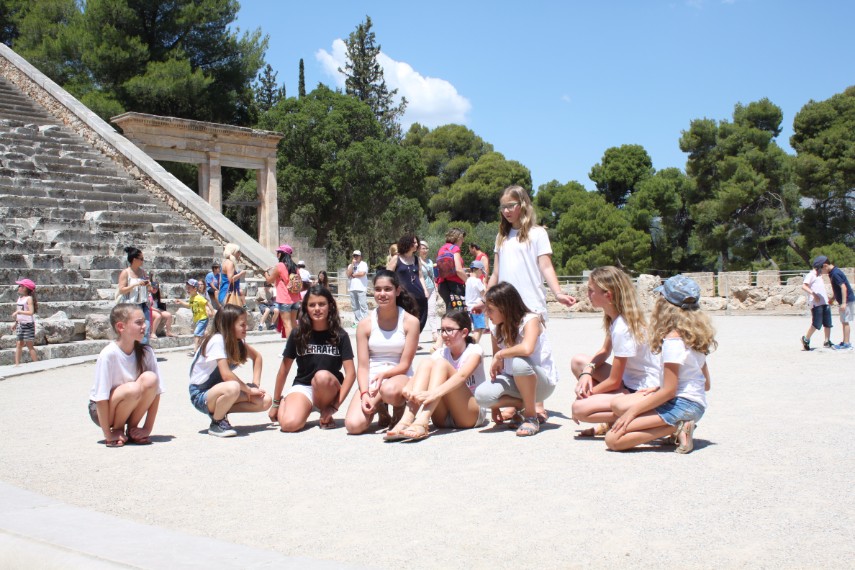
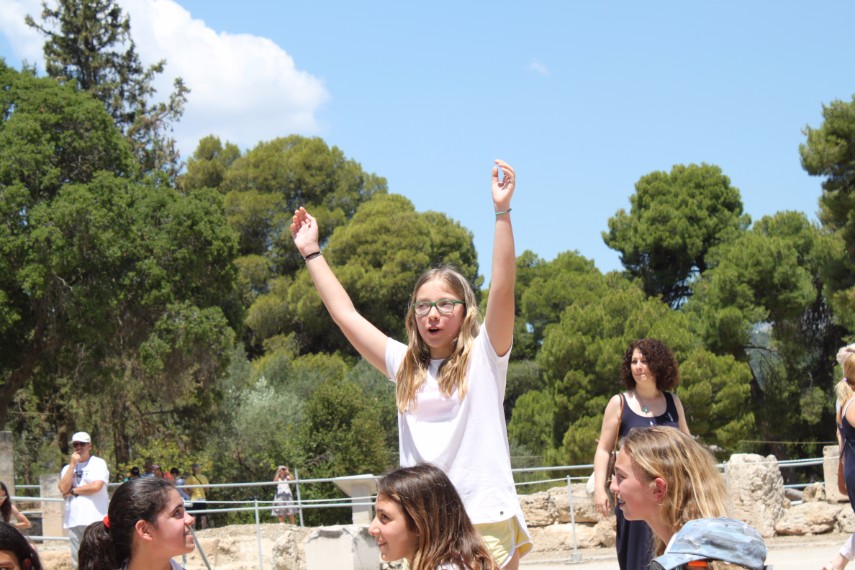
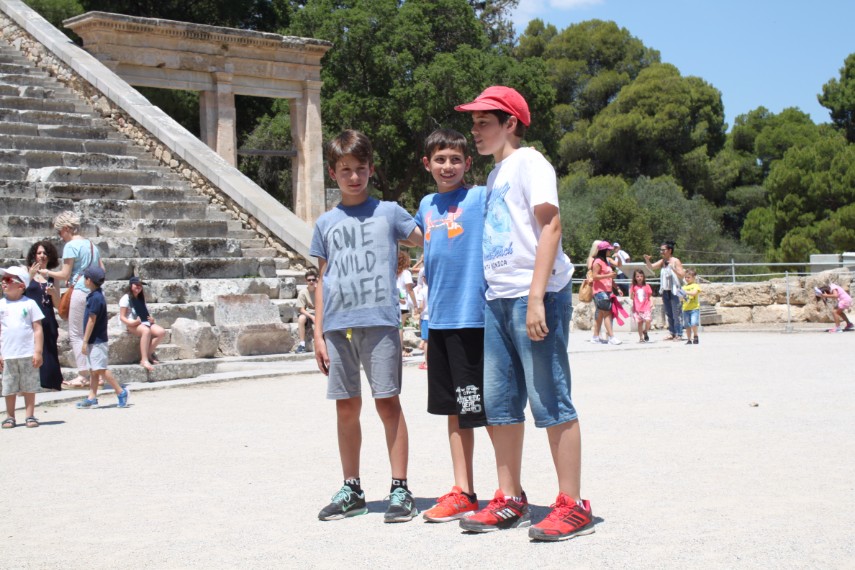
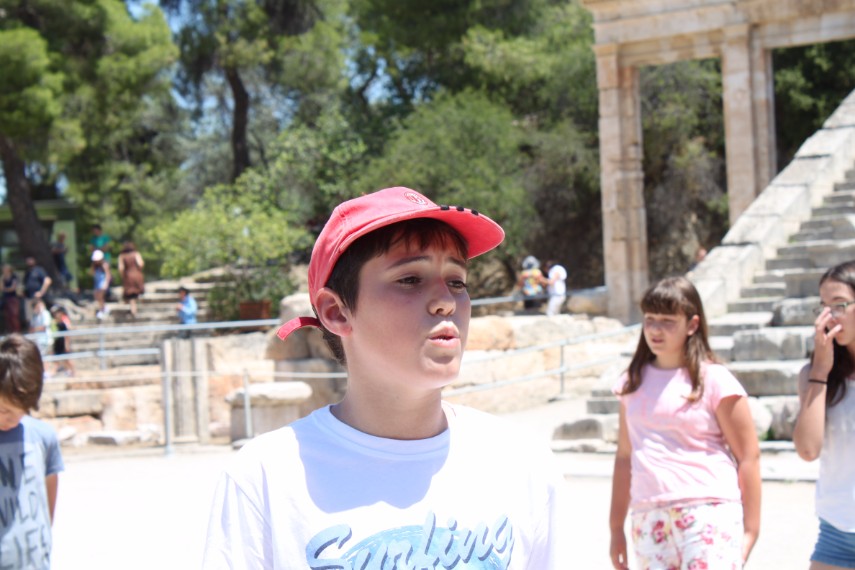
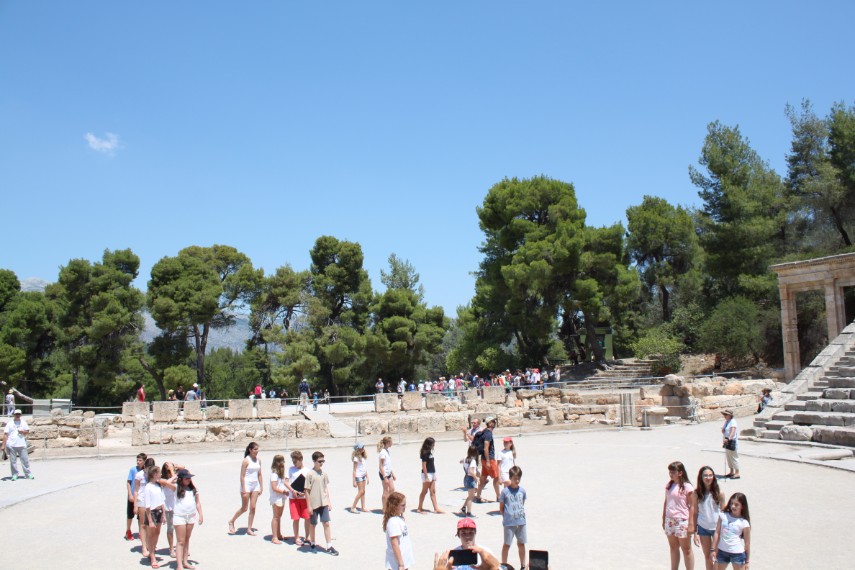
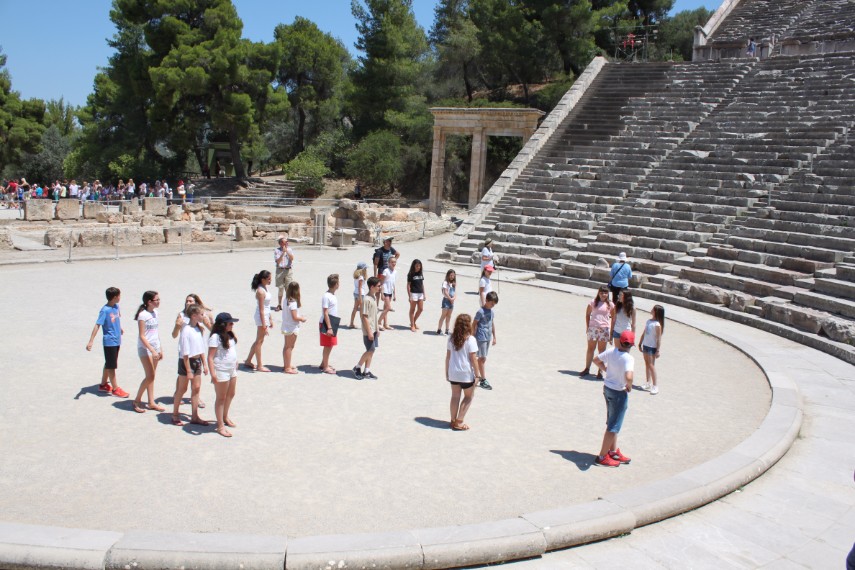
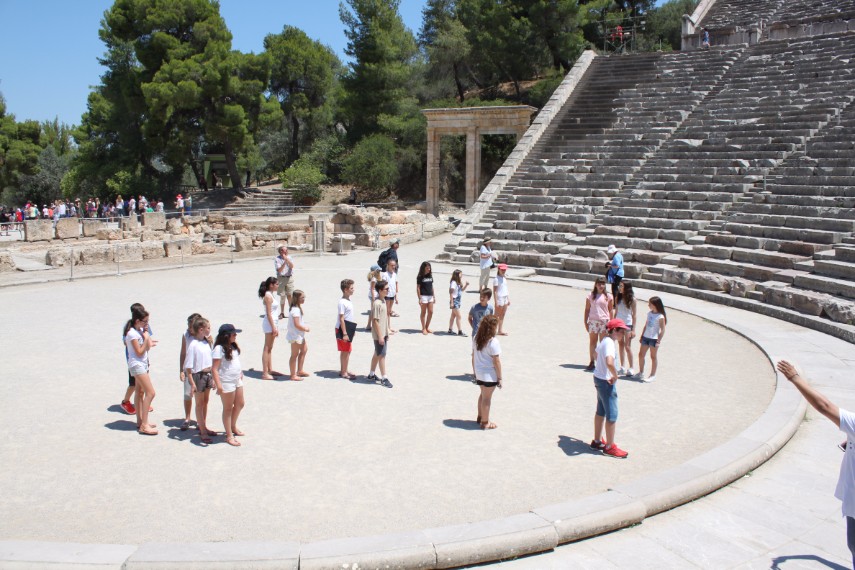
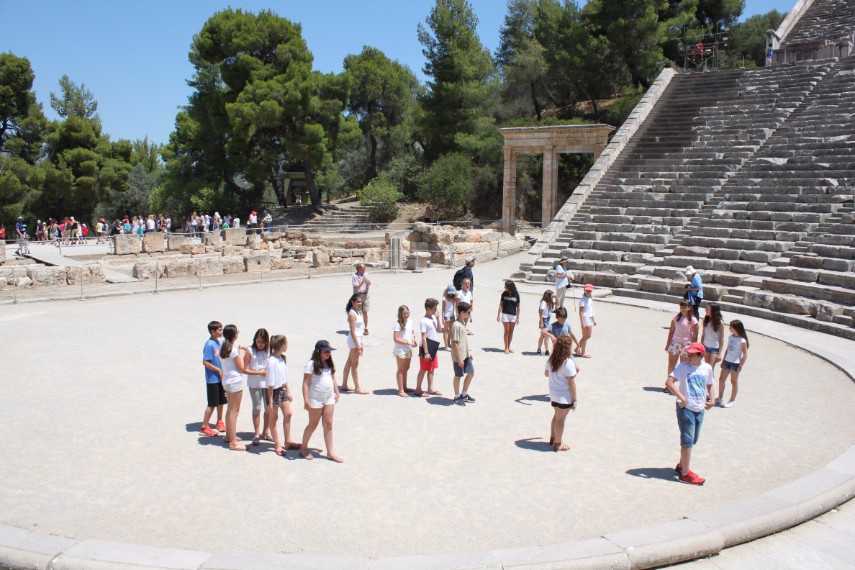
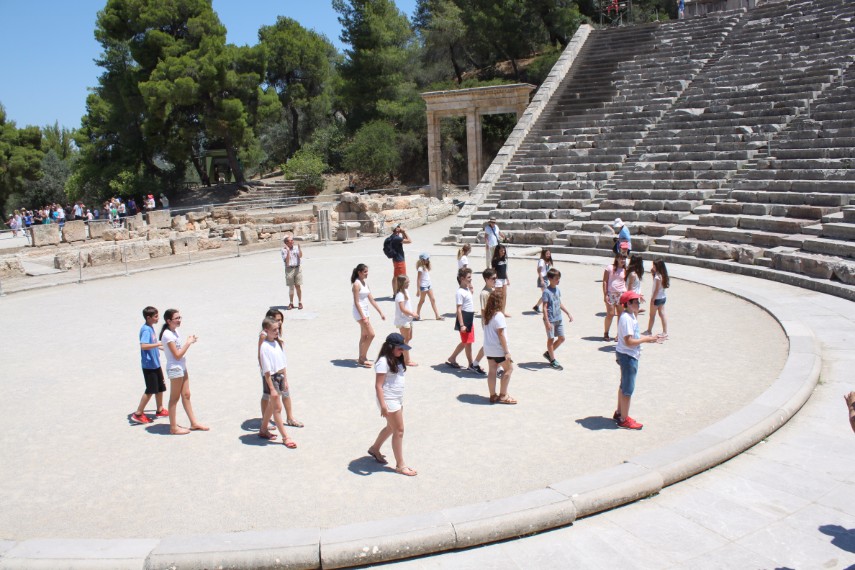
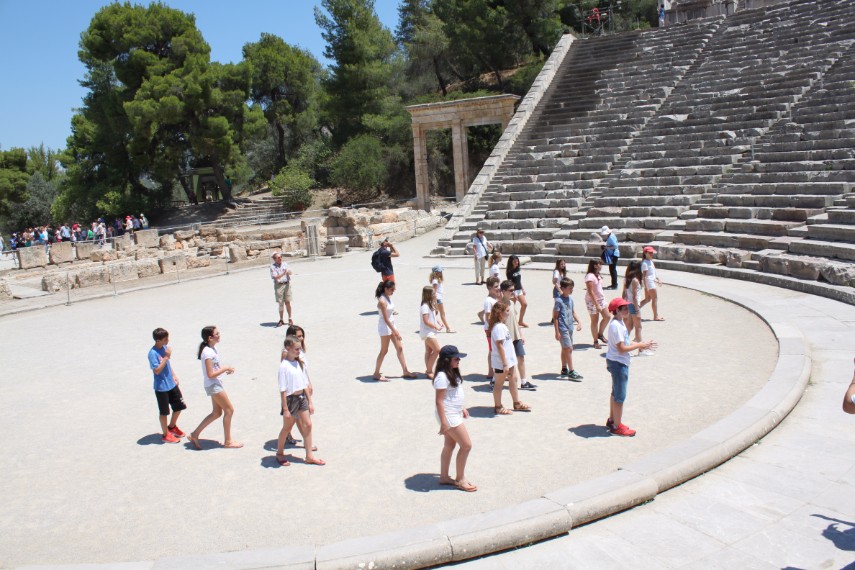
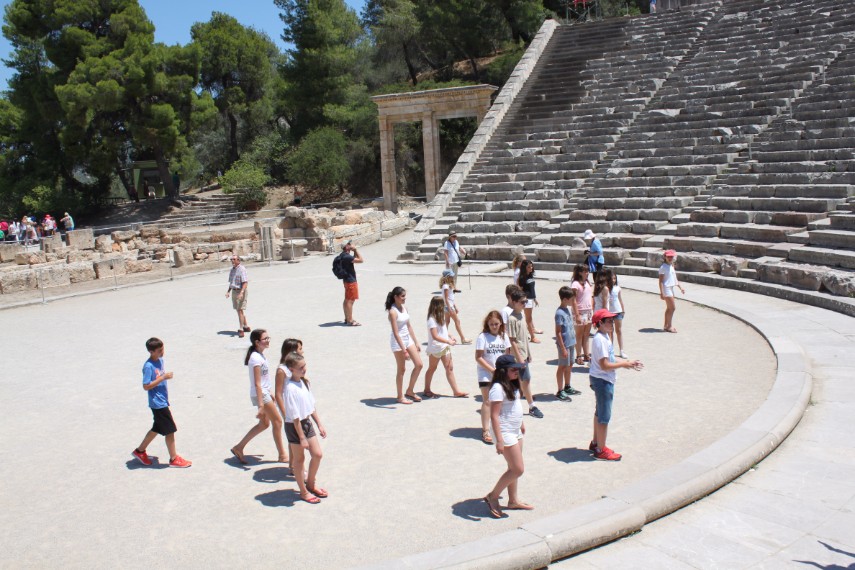
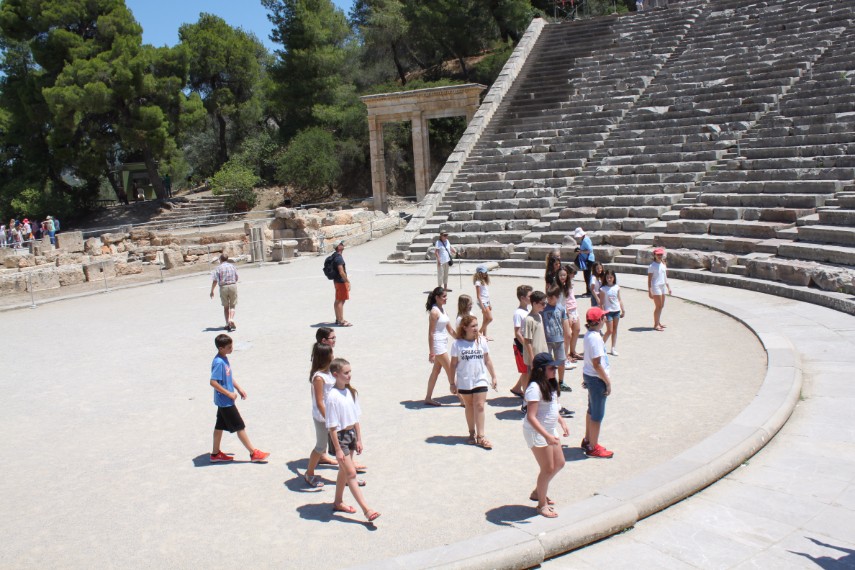
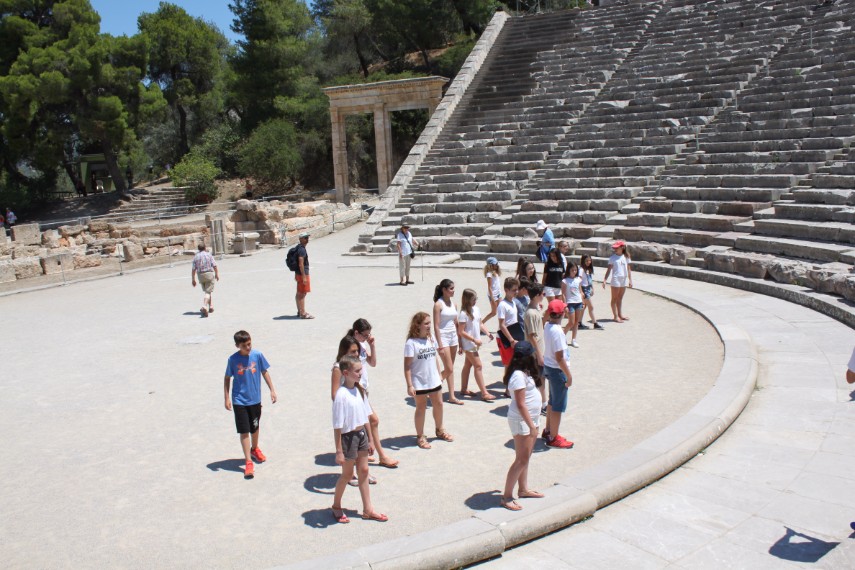
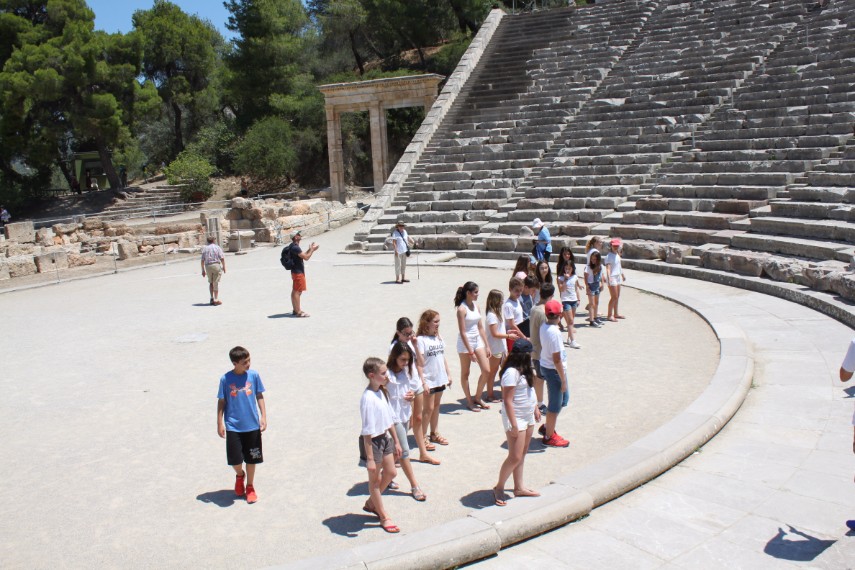
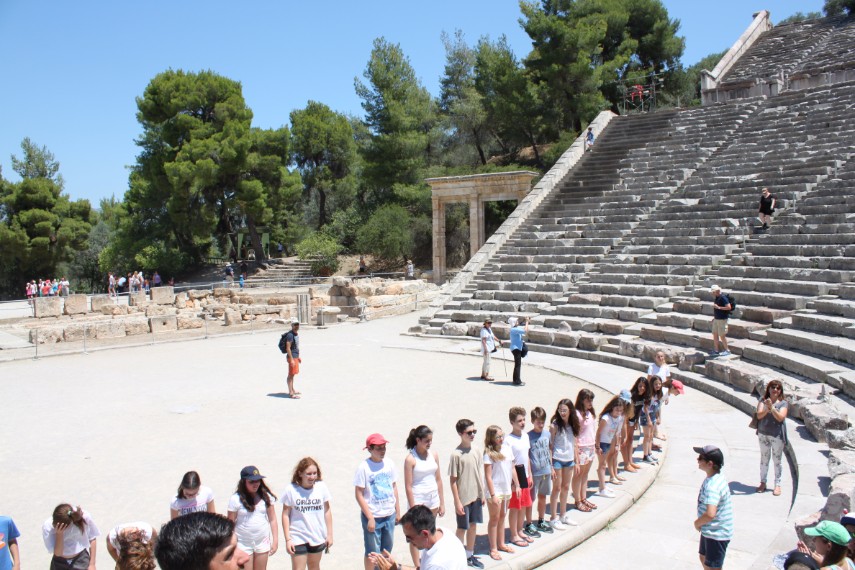
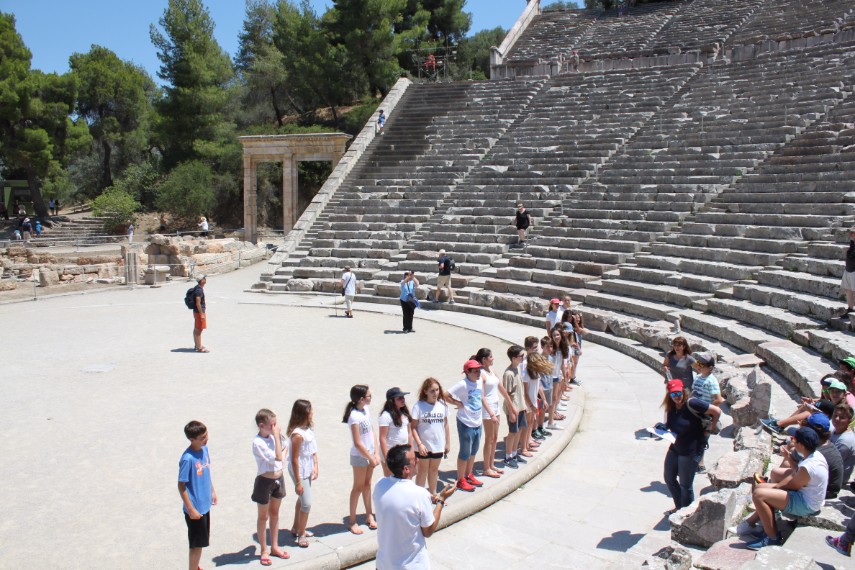
Primary 6 students studied citizenship this year as part of their curriculum. But, where did the concept of “citizenship” first come from? Everyone agrees that citizenship can be traced back to the early city-states of Ancient Greece. The balance of participation, obligations and rights constituted the essence of citizenship, together with the feeling that there was a shared interest. So, how do you teach your students all this? By diving into the world of the ancient classics. Aristophanes’ “The Ecclesiazusae” (or “Women in the Assembly’) was used in order for students to understand the importance of everyone taking part in the running of the community’s affairs. Certain extracts were selected and analysed thoroughly in order to get insight on the workings of political institutions and practices. This created the idea of a bilingual performance as the students came to realise that such literary works are world heritage. Then, during the school visit to Epidaurus, parts of the comedy were delivered in Modern Greek as well as English in the ancient theatre where students were received with enthusiasm by unsuspected visitors. The students themselves were extremely proud and awed to be standing in the most perfect ancient Greek theatre, confirming the link between the ancient and modern world.
https://impschool.gr/erga-emeres16-17/index.php/item/1106-citizenship-and-aristophanes-the-ecclesiazusae-primary-6#sigFreeIdd97ac514b3